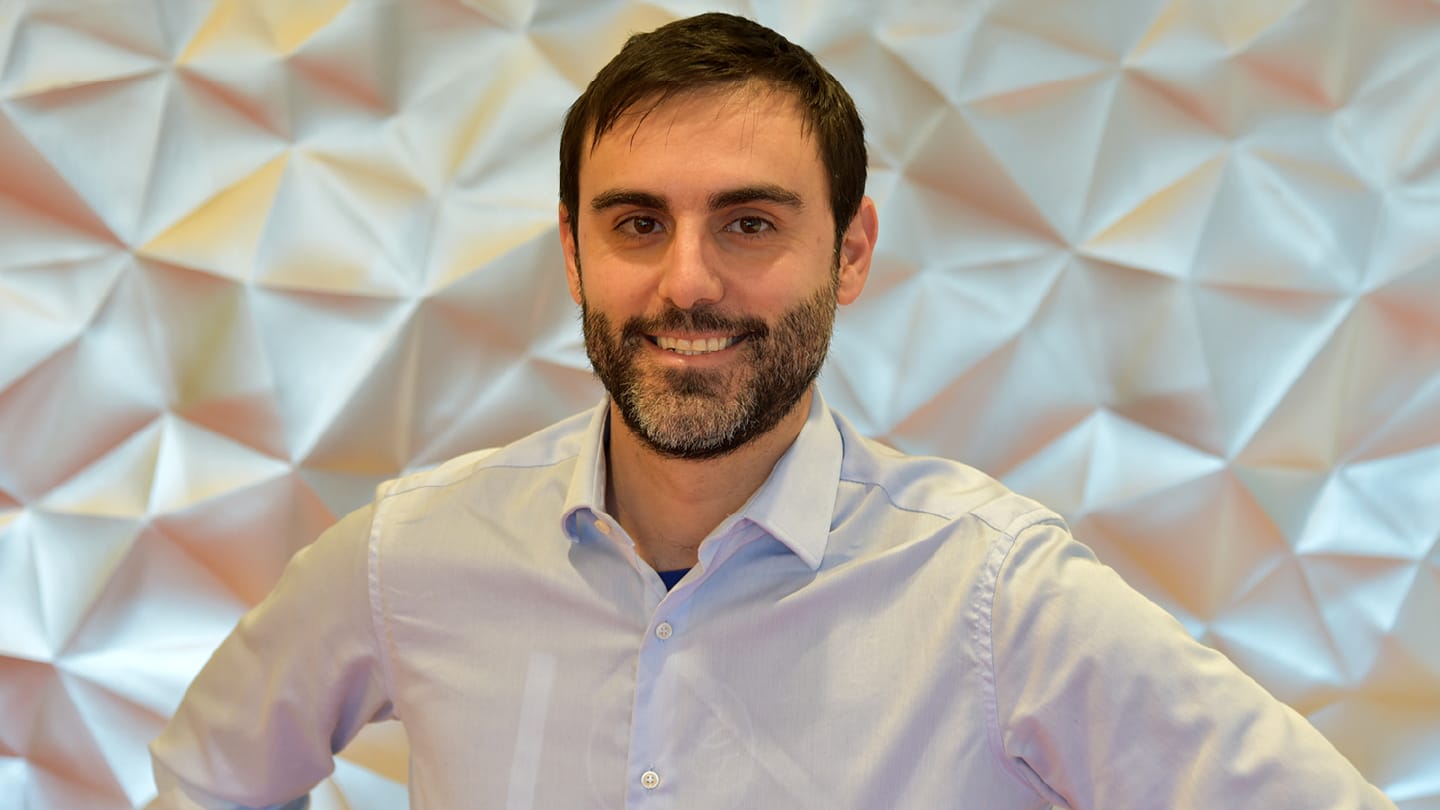
Miguel Forte, President, ISCT, board member of ARM and CEO of Kiji Therapeutics
The greatest challenge in cell and gene therapy (C>) at present is patient access. Limited patient access – driven by constraints in manufacturing capacity, clinical delivery, and above all reimbursement – is restricting both treatment and confidence in the sector's business models. This, in turn, is restricting investment, further limiting the growth and maturation of the field. New business models and greater confidence in the long-term value of these therapies are needed if we are to expand access for patients with unmet medical needs, many of whom could achieve long-lasting, potentially curative outcomes.
John Maher, Chief Scientific Officer, Leucid Bio
The biggest bottleneck is not scientific imagination; it is delivery. As a field, we have extraordinary ideas, but too many therapies remain slow, complex, expensive, and difficult to manufacture at scale. In autologous cell therapy especially, vein-to-vein time, manufacturing variability, release testing, logistics and cost all limit impact.
My firm view is that we need to remove as much unnecessary human intervention and manual paperwork from the process as possible. These therapies are already biologically complex; we should not add avoidable operational complexity on top. Every manual handover, paper-based check, and disconnected system introduces delay, cost and risk.
The solution is to invest much earlier in scalable manufacturing platforms, automation, digitalisation, closed-system processing, integrated data capture, and robust quality systems. We also need closer alignment between academic innovators, manufacturers, regulators, and health systems, so that promising therapies are designed from the outset with delivery, reproducibility, affordability, and patient access in mind.
If we want cell and gene therapies to move beyond highly specialised settings and reach patients at scale, we have to treat manufacturing and delivery as central scientific and clinical challenges - not as downstream operational details.
Edwin Stone, CEO of Cellular Origins
The biggest industry bottleneck is the flow of our manufacturing processes.
The industry already has transformative therapies and highly capable bioprocess tools. The challenge is that production still relies heavily on skilled operators manually moving materials between disconnected manufacturing steps. This approach does not scale economically or operationally to the volumes required to treat large patient populations. The biology is ready, but the movement of consumables, sterile fluids, and data through manufacturing is not yet reliable or efficient enough.
To reach commercial scale, we need to start thinking like a manufacturing industry, rather than a laboratory-based one. That means designing facilities that can deploy the best tools, support advanced biology and operate efficiently.
The goal is not to reinvent the biology, but to connect proven technologies into a connected, scalable system that will deliver efficient, consistent production.
If we want these therapies to reach tens of thousands of patients per year, we need manufacturing models that are designed for industrial scale.
Daria Donati, Chief Scientific Officer of Genomic Medicine at Cytiva
The biggest bottleneck is not a single technical limitation—it is the fragmentation of the system. Biology, manufacturing, analytics, regulatory pathways, and clinical delivery are still too disconnected, and that creates inefficiencies at every step.
We often talk about “scaling manufacturing,” but the real challenge is scaling complexity. Each therapy behaves differently, and we are still largely building bespoke solutions around each program. The result is cost, variability, and time.
The way forward is twofold:
- Standardization at the right level – not of the therapy itself, but of platforms, analytics, and data frameworks
- True integration across the value chain, including digitalisation and closed-loop feedback between clinic and manufacturing
Until we treat cell and gene therapy manufacturing as a system engineering problem, progress will remain slower than the science warrants.
Fabian Gerlinghaus, Cellares Co-founder and CEO
It’s always been manufacturing. Cell therapies are produced today largely the way they were 15 years ago, meaning by hand, in open systems, and by a workforce that can’t scale fast enough to meet demand. We have approved therapies that can’t reach the patients who need them because the process of making those therapies is too slow, expensive, and unreliable. The science ran ahead of the infrastructure, and the infrastructure never caught up.
The path forward is industrialization, a word that unsettles some people because it sounds like it’s in tension with the precision these therapies require. Cellares is proving that this is not the case. Every other industry that produces complex, high-stakes products at scale solved this problem through automation, closed systems, and standardized processes. There is no fundamental reason cell therapies should be exempt from that logic. The challenge has been building the right platform to enable it.
The fix is not incremental because layering automation onto a manual process only gives you a slightly better manual process. What the field needs is manufacturing architecture designed from the ground up for throughput, reproducibility, and cost structure. That architecture is what will translate the promise of cell therapy into broader patient access.
Michael May, CEO, CCRM
The most significant bottleneck slowing progress in the field is access to capital, particularly at early stages, driven by the retreat of investors after an era of overexuberant investing. Attracting investors back to the sector, which has a steady pipeline of amazing clinical outcomes and regulatory approvals, now requires demonstration of durable commercial success. Too many of the sector’s launched products have not achieved expected adoption and sales. Even at the earliest stages of development, we must ask the question: “Will someone pay for the product we are developing?” This requires us to regularly evaluate the “therapeutic headroom” associated with a product, which is tethered to standard of care. Standard of care is not static and will improve over the years-long development of a new product. If the therapeutic headroom of a product is not large enough when a product is finally launched, the market (e.g., patients/health care providers/payors) will assess the balance of benefit, cost, and risk effectively and efficiently, regardless of the “gee whiz” science behind the product.
Bruce Levine, Barbara and Edward Netter Professor in Cancer Gene Therapy, University of Pennsylvania Perelman School of Medicine
This is a multi-factorial answer because cell and gene therapy is complex! The biggest bottleneck is the full translational system around the therapy: manufacturing, analytics, quality, clinical infrastructure, reimbursement, and regulatory predictability. The biology is advancing rapidly, but patients only benefit when the entire system works. We fix it by designing products for manufacturability and access from the start, building stronger clinical networks, modernizing release testing, and aligning regulators, payers, manufacturers, and treatment centers around responsible scale-up.
Claudia Zylberberg, PhD, co-founder and board chair of ARScience Bio, founder and chair of Akron Bio, and co-founder and board chair of Kosten Digital
The bottleneck is no longer just scientific innovation. It is the lack of infrastructure needed to implement these therapies at scale.
We still have disconnected systems between hospitals, manufacturers, suppliers, regulators, and patient care teams. Data exists everywhere, but interoperability and orchestration remain limited.
The field needs to move beyond isolated innovation and start thinking as an integrated ecosystem. We need better digital infrastructure, standardised workflows, smarter data utilisation, and operational models that allow therapies to move efficiently from development to patient access.
Without that coordination, scalability and affordability will remain major challenges.
Stuart Lowe, Head of Advanced Therapies, TTP
Incredible scientific progress is being made in the cell and gene therapy field to overcome the limitations of conventional CAR-T approaches, including in areas such as solid tumors and regenerative medicine. These therapies currently account for around 10–15 percent of the field, but their numbers are growing quickly as next-generation approaches become more advanced. The biggest bottleneck for these companies is process scaling. As they move from preclinical development to clinical trials and, ultimately, commercialization, their needs are not being met by off-the-shelf manufacturing equipment because of unacceptable compromises in labor intensity, facility costs, and process deviations. This means the traditional model of process development teams transferring manual processes onto standardized platforms at a manufacturing site is no longer fit for purpose. What is needed is a concurrent engineering step in which purpose-built closed consumables and automated unit operations are developed alongside the process itself. This allows process development teams to establish scalability before bottlenecks in the supply of clinical or commercial products are encountered.
Jason Bock, CEO of CTMC
The biggest bottleneck is commercial scalability.
The field has no shortage of innovation. We have extraordinary biology, creative engineering, new targets, new constructs, new editing tools, and new ways of thinking about immune cells as medicines. The problem is that too many of these innovations still do not have a clear path to becoming scalable commercial products.
That is especially true in cell therapy. A therapy can show remarkable clinical activity and still face enormous challenges if it is too slow, too expensive, too variable, too labor-intensive, or too difficult to deliver reliably across many treatment centers. In cell therapy, manufacturing is not a back-office function. It is part of the therapeutic hypothesis. If the process cannot scale, the product cannot fully realise its clinical potential.
The field cannot solve this just by building more cleanrooms and hiring more operators. That may increase capacity, but it does not fundamentally change the scalability equation. To make cell therapy broadly accessible, we need to move from artisanal manufacturing toward industrialised manufacturing — closed systems, robotics, automation, integrated analytics, digital batch records, and fit-for-purpose process control.
The monoclonal antibody field offers a useful analogy. Antibodies did not become one of the dominant therapeutic classes simply because the biology was compelling. The field developed powerful discovery tools, learned to engineer antibodies for manufacturability, and built industrial manufacturing systems that could deliver products consistently at global scale. Cell therapy needs to go through a similar maturation, but faster.
For cell therapy, that means designing both the product and the process for scalability from the beginning. It means asking not only, “Can this work in a patient?” but also, “Can we make it consistently? Can we reduce labor and variability? Can robotics replace manual steps? Can we automate the highest-risk parts of the process? Can we measure what matters in real time? Can we shorten vein-to-vein time? Can we support hundreds or thousands of patients without recreating an artisanal process at every site?”
At CTMC, this is central to how we think about the field. The goal is not just to manufacture cell therapies. The goal is to help build the next generation of scalable cell therapy manufacturing: where product design, process development, analytics, automation, robotics, regulatory strategy, and clinical delivery are developed together.
So the bottleneck is scalability, but not in the narrow sense of bigger facilities. It is scalability of the entire therapeutic model: the product, the process, the labor model, the analytics, the regulatory strategy, the clinical workflow, and the economics.
That is what the field needs to solve next.
Newsletters
Receive the latest pharmaceutical news, personalities, education, and career development – weekly to your inbox.