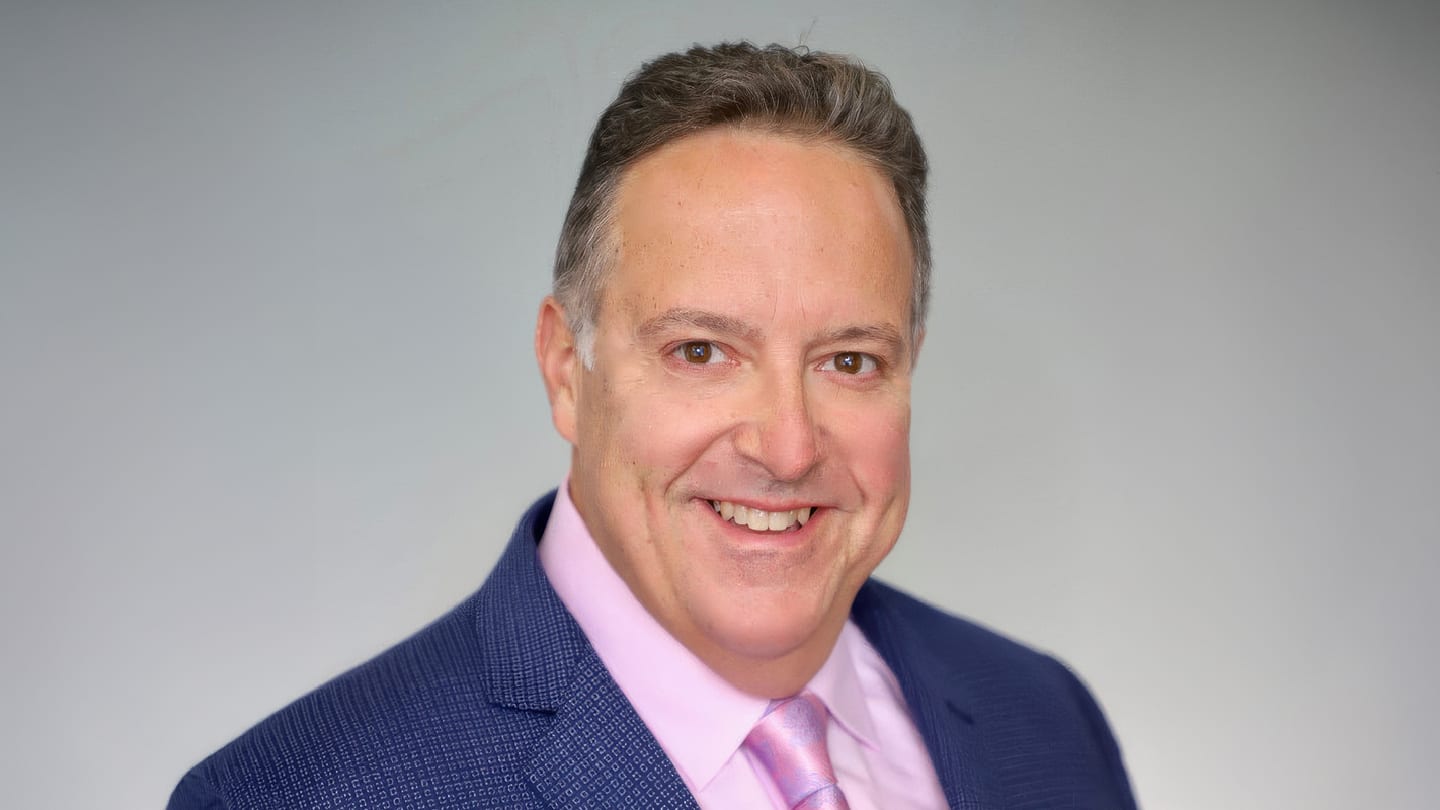
“If we get the science right, and we do it manually on pen and paper, we will scale one at a time,” says Alexander Seyf. “But one at a time doesn’t really cut it anymore.”
For Seyf, that shift – from treating individual patients to delivering therapies at scale – is one of the key challenges facing cell and gene therapy today.
He came into the field in 2018, looking to apply digital tools to industries where they could make a real impact. What he found in cell and gene therapy was a field progressing apace in terms of the science, but still struggling to translate that progress into scalable delivery.
“Digital is not a 'good to have,' it’s a necessity,” he says. “We cannot possibly produce more without having a digital platform.”
That perspective has shaped his focus on how therapies are developed and manufactured, and where the industry still faces bottlenecks – from limited information sharing to a lack of collaboration across organizations.
He is also candid about the UK’s position within the global landscape. We “had a very strong position,” he says, “but unfortunately we lost the momentum somewhat.”
In the conversation that follows, Seyf discusses how he came to the field, where he sees the biggest inefficiencies today, and why digitalization will be central to the future of scalable cell therapy manufacturing.
Please tell me a bit about you and your background – specifically what got you interested in the cell therapy space?
Before I entered the industry in 2018, I had started a couple of companies. And after my last exit with a friend of mine, we wanted to find an industry that we could help with technology, and build the kind of platform to encourage entrepreneurs to bring their ideas to life.
So we created an incubation company – we called it Chain Cube, it’s still around – and the intention was how we can help entrepreneurs who have a lot of ideas, but they need technology platforms.
Out of that venture, we came across Professor Mark Lowdell at University College London, and he had been working in the cell and gene therapy space for a number of years. One of the predicaments he had was scalability and speed. So he thought, digitization is something that we have used in other industries – why can't we use it here?
We put our heads together, and I went to a cell and gene conference in Italy, and we got a pretty good vibe from the industry that there is a demand for such a thing.
For me, it was very motivating that we are not just doing technology for the sake of technology, or to make money out of it, but also helping patients with something that is curative, and that brings quality of life to many people.
As one of my colleagues says when he introduces himself: “I’m the patient, or I’m going to be the patient, or I know a patient.” We all, one way or another, unfortunately, are going to come across these diseases.
Seeing that we can help to bring some unity and harmonization in the industry really gives us the motivation to do what we do.
What is the UK’s position and standing in cell and gene therapies? How has this evolved over the past decade – and how does it compare with other major CGT hubs?
From my humble perspective – I’m not a scientist – I believe the UK had a very strong position. But unfortunately, we’ve lost momentum a little bit.
I don't think Brexit helped – particularly the uncertainty around Horizon investment and potential supply chain disruption.
And then I think the government lost some of its focus on trying to be number one in cell and gene therapy, competing with the US and elsewhere.
That said, I really appreciate players like the Cell and Gene Therapy Catapult. I think they’ve played a great role, and they continue to do so. People like Stephen Ward and others have done a phenomenal job in carrying the torch, despite all the challenges.
But overall, I think Europe has seen more growth than the UK. And we also see very rapid growth in Asia – especially China, and also places like Singapore, Australia, New Zealand.
I don’t see that same level of momentum in the UK right now. I think we need to put a bit more emphasis on bringing the industry forward.
What are the main bottlenecks preventing CGT therapies from moving smoothly from clinical success to commercial delivery?
Information is everything these days. But information that is not distributed is worthless.
We don’t talk enough about the wonderful work taking place in this space. We see some reports in the media here and there, but not enough. Patients should know that there is hope, that there are different and potentially more powerful ways of tackling disease.
This also drives politicians and lawmakers to move in the right direction.
The second piece is collaboration. We definitely lack collaboration between different parts of the cell and gene therapy ecosystem. In the UK, we see that those in the NHS and outside the NHS are often reluctant to let go of their own piece, often creating “Chinese walls" and barriers to spreading knowledge.
We need to share more – especially the things that didn’t work. If you walk somewhere and see a hole, your obligation is to tell the person behind to be careful. If you don’t do that, though you’ve seen it, in reality you’ve caused a problem, because you didn’t prevent somebody from breaking their neck.
We sometimes see this sort of thing in cell and gene therapy. We need to embrace collaboration, and knowledge sharing.
Where do you see the biggest inefficiencies in current workflows? Are these challenges consistent across regions?
There are some places where the platform is more solid. For example, in California, you have The California Institute for Regenerative Medicine. They have billions of dollars, and they really help the biotech industry to grow. So they are trying to unify efforts. There’s still more to do, but they are doing a good job.
In the UK, we have the Cell and Gene Therapy Catapult, and I really praise the work they are doing. They’ve put that platform together for knowledge sharing and collaboration. But again, they need more support from the government to really take it to the next level.
Then if you look at Asia, particularly China, I think by nature the system is more unified. They do seem to be doing a pretty good job. You can see it in the growth – they have as many clinical trials as Europe and the US combined, and that’s in a very short time.
The cost is amazing, and the speed is amazing. So if I had to bet, I would say in three to five years China could be the dominant player.
How can digitalization reshape CGT manufacturing?
If I take your phone away today, you almost become handicapped, right? There are very few people who can manage without a phone. If we didn’t have phones and computers, could we talk today?
So to even justify whether we need digital tools – it is just ridiculous for me. It’s not a "good to have," it’s a necessity.
We cannot produce more without digital platforms. We cannot produce at volume without automation and robotization – and you cannot have those without software underneath.
Digital enables you to learn from your mistakes. It helps you benefit from what works, and also learn from what doesn’t work, and improve it. It brings economy of scale much faster than anything else.
We’ve seen this in every industry – manufacturing, supply chain, retail – but in healthcare, we are still very conservative.
So digitalization is really about using tools that already exist. It’s about telling technology what you need – what capabilities you are missing – and then letting technology provide that.
As the sector moves toward commercialization, what should developers be doing differently today?
I think there is still this mindset that we should get the science right first, and then think about tools.
But we always say – it’s better to use the tools early than late.
There’s also a financial reality now. Funding is not unlimited anymore, so people are more conscious about how they spend.
As someone said very wisely, there are three P’s you always need to consider: patient, physician, and payers. If you keep those three in mind from the beginning, you have a better opportunity of making something viable.
Because if something doesn’t make sense financially, no one will invest in it, no matter how good the science is.
Are you optimistic about the future of the field?
I am very positive about it – and increasingly so.
Of course, politically we are in a pretty bad place right now, so timelines might shift. But we are seeing more mature science, and we are seeing patients who have survived for decades, which is a really good proof of efficacy.
Also, society is becoming more informed, and that helps push the politician in the right direction.
At the same time, funding limitations are forcing people to think more carefully, to be more disciplined.
It is only a matter of time before cell and gene therapies are treating substantially more patients.
Newsletters
Receive the latest pharmaceutical news, personalities, education, and career development – weekly to your inbox.