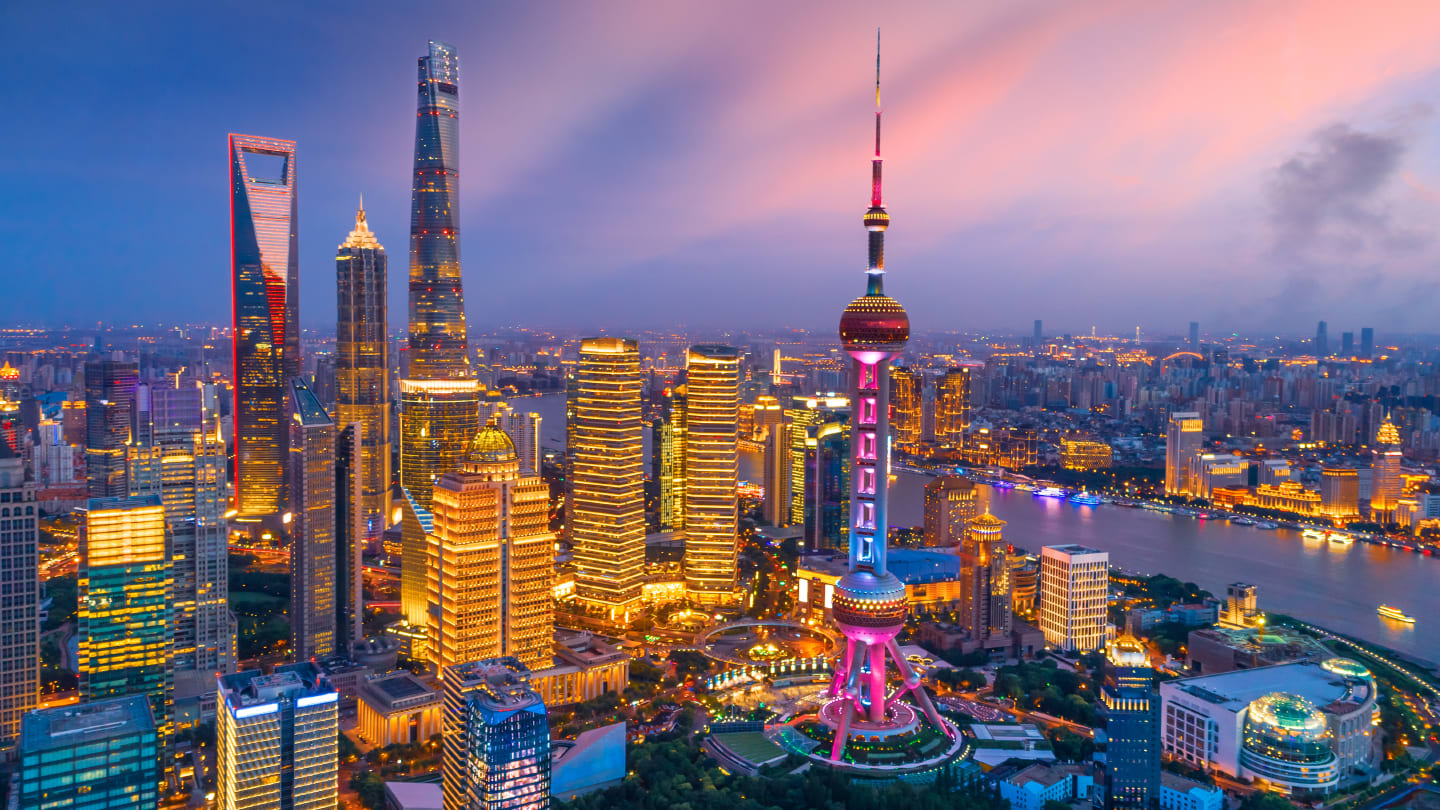
When Daphne Smyth visited one of China’s flagship life sciences hubs, she expected a science park. What she encountered was something far more ambitious.
“It’s [really] a science city,” she says. “Nearly 300 square kilometers of startups, manufacturing, hospitals, universities – all fully integrated and fully supported by the government.”
For Smyth, who leads global regulatory affairs at Veristat, the visit marked a turning point in how she understood the momentum behind China’s pharmaceutical sector. Despite more than three decades in regulatory strategy – including leadership roles across Asia-Pacific – the speed and scale of China’s evolution stood out.
The visit also reinforced how quickly the scale and scope of the Chinese market are becoming apparent. As Smyth notes, much of this is only fully understood when seen firsthand – particularly the extent to which development, manufacturing, and clinical infrastructure are integrated within the same environment.
“[I]t's difficult to internalize it until you've actually experienced it,” she says.
That transformation is now spilling beyond China’s borders. Over the past five years, the country’s biopharma industry has expanded rapidly, driven by sustained government investment, regulatory reform, and a growing appetite for global commercialization. Companies that once focused almost exclusively on the domestic market are now actively seeking entry into the US and Europe.
At Veristat, that transition has become impossible to ignore. Smyth’s team, which specializes in regulatory consulting from early development through to marketing authorization, is now working with several large Chinese sponsors. What began as a handful of engagements has quickly grown into a steady influx of interest.
That growing interest reflects a broader shift in how Chinese companies are approaching development beyond their domestic market. As Smyth notes, many are now actively looking to develop their drugs outside China, building on products that have already been developed locally.
“Having experienced increasing inquiries, we decided to visit BioChina,” she says. “At the event, we were overwhelmed with the amount of interest in the services of companies looking to develop their drugs outside of China.”
As Chinese biopharma steps onto the global stage, new questions are emerging. How transferable is clinical data generated in China? What regulatory hurdles stand in the way of global approval? And are global frameworks becoming more aligned – or more complex – as new players enter the system?
Smyth shares her perspective on these shifts, drawing on both long-term experience and recent firsthand exposure to one of the fastest-moving pharmaceutical markets in the world.
Please could you give me an introduction to you and your role at Veristat?
I head up the global regulatory affairs function at Veristat and am based in Ireland. I have spent 35 years in regulatory strategy, which gives you a good sense of how much the landscape has evolved over time.
Veristat is a clinical CRO, but our regulatory team is primarily focused on consulting. We support companies from early-stage development through to marketing authorization and new drug application submissions. While we work alongside clinical programs, our main role is helping sponsors with regulatory strategy – particularly as they move across regions.
In the past year, we’ve seen increasing inquiries from Chinese biopharma companies, which has been a very interesting development.
Could you give me a brief overview of the growth of the Chinese drug development market over the past 5-or-so years?
The growth has been substantial, and from what we have seen, it’s been strongly supported by government investment. I have seen figures of more than $13 billion has been invested over a recent five-year period.
But the real story is how that investment has been used. The science hub we visited near Shanghai brings together research, development, manufacturing, hospitals, and education in one integrated environment.
The scale is just incredible. But it’s not just the size, it's how everything connects – from early research through to manufacturing and clinical infrastructure. That level of integration is what makes the scale so striking. Companies can effectively move from early discovery to full-scale production within one integrated environment.
From our perspective, the scale of the industry only became clear when we saw it firsthand. The volume of companies, the infrastructure, and the level of activity are all far beyond what many people in the West might expect.
Historically, many Chinese companies focused on domestic markets. What has changed in recent years to drive this push toward international commercialization?
There are a few reasons for that. First, the regulatory environment in China has improved significantly. Approval processes for both clinical trials and marketing authorization have become more efficient, which means more products are reaching the domestic market.
At the same time, pricing has come down and reimbursement has become more difficult. Development costs in China are lower, and reimbursement levels reflect that. As a result, companies are looking beyond China to access markets where pricing and returns may be higher. While China remains a massive market in its own right, companies are increasingly recognizing the opportunity to compete on value internationally – particularly in markets where pricing and reimbursement differ.
There is also clear government support for international expansion. The strategy isn’t just to strengthen the domestic industry, but to support Chinese companies working outside China.
So, it’s a combination of maturity, economic drivers, and policy alignment that’s pushing companies outward.
When Chinese sponsors look to enter markets such as the US or Europe, what are the biggest regulatory challenges they face?
The main challenge is ensuring that clinical data is relevant to the target population.
Regulators such as the US Food and Drug Administration and the European Medicines Agency expect studies to reflect the patient populations in their regions. If development has taken place entirely in China, there can be questions around whether the data is fully transferable.
This can relate to differences in standard of care, comparators used in trials, or potential genetic and ethnic factors that may influence response. These differences can be subtle, but they are important from a regulatory perspective, particularly when agencies are assessing whether results can be applied to their own patient populations.
As a result, companies often need to conduct additional studies – sometimes relatively small studies – to demonstrate equivalence and support approval.
How transferable is clinical data generated in China when it comes to securing approvals from agencies like the US Food and Drug Administration or the European Medicines Agency?
It varies. In some cases, only minimal additional data is required – just enough to confirm that the results translate across populations. We have seen examples where that was sufficient for approval. In other situations, more extensive work is needed. It depends on the drug and the data that has been generated, and how closely the trial design aligns with expectations in the target market. So, while data can be transferable, it is not guaranteed – and it needs to be assessed case by case.
Are you seeing differences in how Chinese companies approach early clinical development compared with Western sponsors – and how does that impact later regulatory strategy?
Not fundamentally. Western companies also tend to focus on their home region during early development. European sponsors often begin in Europe, and US companies typically start in the US.
Chinese companies have followed a similar pattern, although we are now seeing more of them conduct early-phase studies internationally – particularly in the US or Australia – to generate data that supports global development from the outset.
That approach can help later regulatory submissions, because it demonstrates broader applicability early on.
Looking ahead, do you expect regulatory frameworks to become more harmonized – or more fragmented – as this trend continues?
Overall, the trend is toward more harmonization.
China’s participation in the International Council for Harmonisation has brought its regulatory framework closer to global standards. More broadly, regulatory systems are becoming more transparent, and guidelines are more widely shared.
Differences still exist, but they tend to arise in specific areas – such as patient populations or local precedents – rather than in the overall framework.
What will the global drug development landscape look like in five years time if current trends continue?
We are likely to see a significant increase in innovation coming out of China.
Historically, many products were incremental, but that is changing. We are now seeing first-in-class therapies and strong innovation across areas such as cell and gene therapy, as well as medical devices.
These products are being developed at lower cost, often with strong government support. As they enter global markets, they will shape the market. That combination of cost efficiency and scale is likely to make a significant difference as these therapies move into international markets.
There will be challenges – particularly around more complex modalities such as cell and gene therapies, where manufacturing and comparability are harder to transfer across regions.
China is becoming a major source of innovation, and its influence on global drug development will continue to grow.
We’re going to see some very interesting developments. I look forward to it.
Newsletters
Receive the latest pharmaceutical news, personalities, education, and career development – weekly to your inbox.