Based in the Texas Medical Center, CTMC was established in 2022 as a joint venture between Resilience and the MD Anderson Cancer Center, with the aim of accelerating the development and manufacturing of cell therapies for cancer patients.
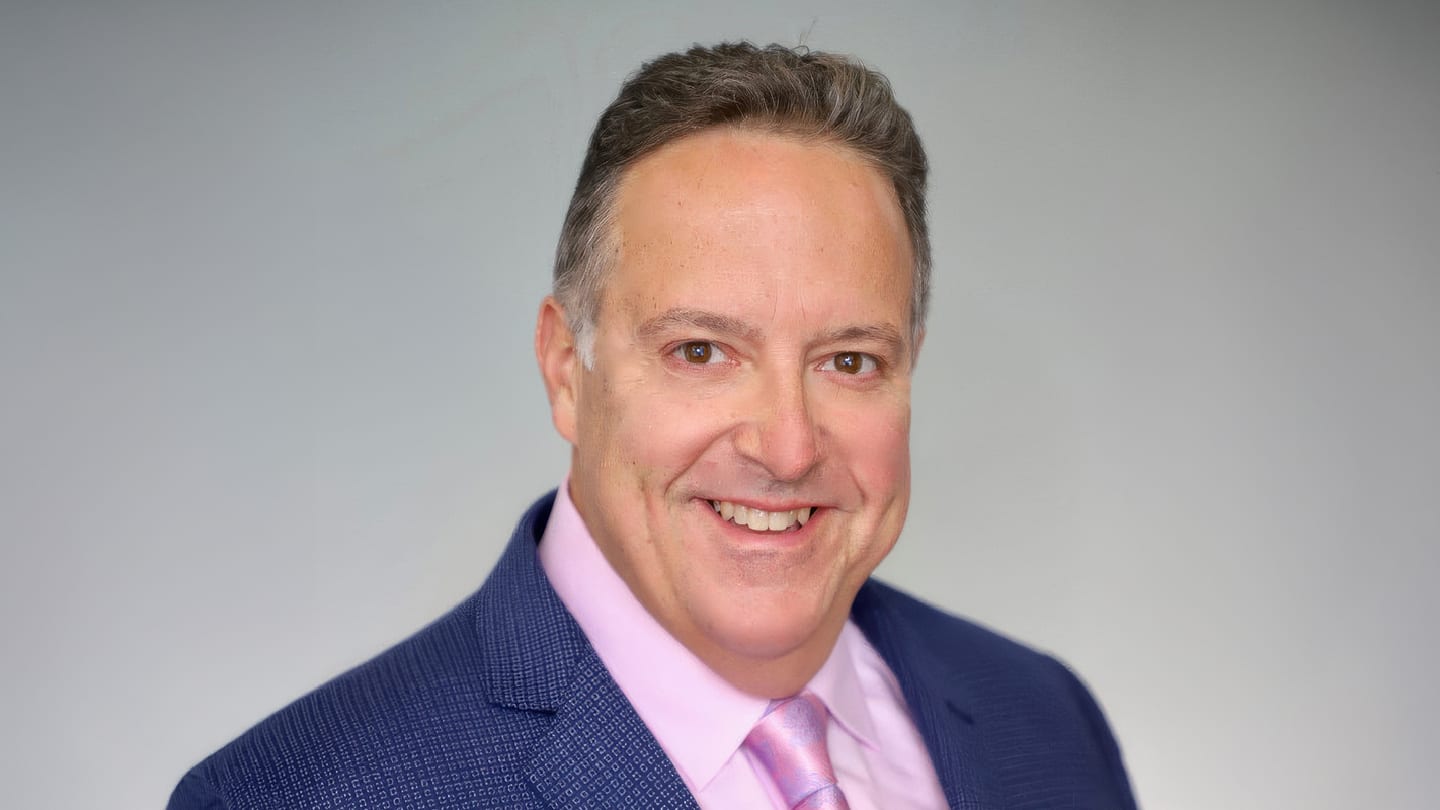
The Medicine Maker sat down with co-founder and CEO of CTMC Jason Bock to learn more about the organization, the advantages brought by being in such close proximity to a world-renowned institution, and how contemporary cell therapy manufacturing challenges prompted him to create a company where a medicine maker can find himself in the dream situation of working on viable solutions to life-saving cancer therapies.
Bock also reflects on a shifting investment landscape in cell and gene therapy, highlighting what he sees as a disconnect between clinical progress and investor sentiment, particularly following waning enthusiasm for allogeneic approaches.
How did you first become interested in cell therapies?
I've been in therapeutics, discovery and development for more than 25 years. The first 20 of those years were on the “sponsored side” where I was in small-, medium- and large-size biotech and biopharma developing novel therapies and finding ways to bring them from research into the clinic. There, I had the good fortune to lead several products through the global commercialization stage, with peak market sales of over three and a half billion dollars.
Around five years ago, I saw the first cell therapies that were having an amazing impact on patient care – you could give a single dose of a therapeutic to a patient who had no other options, and they could be cured. For anyone making medicine, that's what we're here for.
And yet, it was clear that manufacturing was going to be really tricky. Each patient requires their own dose, and these therapies are incredibly complicated. You're engineering living cells in a very constrained timeline – not because we want to do a fast turnaround or because it's good inventory management, but because if we don't do that quick turnaround, the patient is going to die.
To me, that's like the dream situation for a medicine maker. You have this amazing therapeutic class, you have all these big challenges, and you need to figure out a solution.
Can you explain the link between CTMC and the University of Texas’ MD Anderson Cancer Center?
For other modalities, like small molecules or antibodies, you can make hundreds of thousands doses per batch – if not millions – centrally and then distribute them through a network of pharmacies. But that kind of centralized manufacturing approach didn't seem to make sense for cell therapies, and I realized you could really derive significant benefits by organizing your supply chain around where the patients are.
When I was looking at the landscape and trying to come up with a fit-for-purpose solution that somehow involved medical centers, I thought to myself, “Where's the best place where the patients are?” Well, our office is right in the Texas Medical Center, which is the densest collection of healthcare and patients anywhere in the world.
If you're going to co-localize advanced industrial manufacturing within a dense patient setting, it seemed like that was a good place to prove the case. And MD Anderson being sort of the crown jewel of the Texas Medical Center, where more cancer patients are treated than anywhere else, and has been ranked the number one cancer center for more than 20 years in a row, it seemed like a little bit of a no-brainer.
Can you explain what differentiates CTMC from a traditional Contract Development and Manufacturing Organization (CDMO)?
We have to remember the whole cell therapy field is still relatively nascent. It's early days, in terms of innovations, and manufacturing and regulatory processes. Health Authorities are racing to better understand these products and how to regulate them.
On one hand, you have these amazing clinical results so you want to enable that innovation to quickly reach as many patients as you can, and regulators are aligned with that. On the other hand, these are extremely powerful therapies, and if things go wrong, patients can die.
And so how do health authorities and the FDA walk that line between enabling innovation and protecting safety? That's a really important balance to strike, and it's a relationship between the sponsor and health authorities that you need to work out as well.
Here, it's a day-to-day interaction between the manufacturing facility and the clinical sites.
As we were setting this group up within MD Anderson, biotech companies actually started coming to us and saying, “Hey, we've got this interesting product in the research stage and we think we're about ready to get into the clinic. You guys have all this infrastructure and are doing it at an industrial scale, in a robust way. Can you help us?”
I don't take any credit for coming up with the idea – I was just there talking with some of the venture capitalists who were coming through MD Anderson and they came up with the idea of this sort of collaboration.
So for biotech companies, when they make that decision to move from being a research organization to bringing a clinical candidate into the clinic, rather than them having to transform their whole company and basically shift their entire center of gravity to clinical development, what we allow them to do is partner with us – where we already have that infrastructure in place, as well as a track record of success at a high level. And we've demonstrated historically that we can do this faster than companies can themselves, or with other classic CDMO partners.
And people trust MD Anderson and they trust your mission?
Exactly. I think it's fundamental. What I've really learned, especially in the last five years, is that if you understand the incentives, you can predict the outcomes. I think that was a quote from Warren Buffett’s business partner...
If our goal is to accelerate these innovative and impactful cell therapies to reach the most patients, then it makes sense to structure our partnerships that way as well.
So what we've done is align our mission with our business model. We define and understand where a partner is at – what stage of development they are in and what stage of development they want to get to – and we structure the partnership agreement holistically in terms of those activities, and turn it into a fixed-cost model.
What have you learned about what differentiates a good CDMO from, say, the lesser CDMOs?
There are a lot of good CDMOs whose model is based around working with groups that already have a full-fledged regulatory group, a full-fledged clinical group, and a full CMC group, and basically just need extra hands to execute some activities.
But that's not our approach. Where our model fits best is with relatively small companies who don't have all these functions.
The groups we work best with already have amazing innovations, or amazing research groups that have come up with some novel ways of controlling cell therapies, or modulating them, or coming up with better ways of attacking cancer.
So, we don't do any innovation in terms of novel product development. We focus on manufacturing and analytical development.
We've found that some of these research-based groups really benefit from support towards the end of candidate selection, when they've got it sort of narrowed down but maybe still have five candidates. Then we can support them in terms of applying some of the same assays and analytics that we'll use for the initial clinical study to those products, and help them in that final clinical candidate selection.
In terms of these smaller companies or academics who might not necessarily be experienced in the regulatory and manufacturing side of things, what do you find are some of the common challenges?
A lot of people focus on time to IND (Investigational New Drug), and of course that's very important. But one of our real metrics is: how do we focus on time to both clinical trial initiation and getting those first 15 patients enrolled?
For example, at MD Anderson it can take upwards of six months for an outside-sponsored study to go from IND to site activation. In that respect, MD Anderson is a little slower than many because it's big and there's a lot of bureaucracy. But because we've worked with them frequently, we've standardized our procedures on how we interact with the center and they don't have to reinvent a lot of things for a new cell therapy clinical trial. And so we target with them less than 100 days from IND to site activation, and so far we have hit that target seven out of eight projects.
In any clinical study in oncology, MD Anderson is also almost always the largest enrolling site. They just have more patients, and the entire organization is focused on clinical studies. And so we get very rapid clinical enrollment on the studies that we run, and that shortens the time from clinical trial start to getting 15 patients. And our partners are always amazed with how smooth and quick the process is.
What would be your advice on approaching the FDA regulatory process?
The key is understanding what the FDA’s goals are – which is primarily, in early-phase trials, safety. What are they trying to understand? What are the risks they're trying to mitigate? And so it is about understanding how you can effectively convey that you understand those risks and illustrate what you have done to address them.
Sometimes for biotech companies – because they're so busy and so risk-averse – it can seem catastrophic if they get put on clinical hold. Because for everyone in that company, their number one goal is to get their first product to IND successfully and start that trial. And so these companies tend to be very risk-averse, because you don't want to be the guy having to go into the boardroom and say, “We got put on clinical hold. We're going to try and address it. We're not quite sure how long it's going to take.”
So the default is to be more conservative. But because we've already had those experiences, we can help our partners take some approaches that save time, produce a better product, and still address any FDA concerns.
What are some of the exciting trends you're seeing in cell therapy at the moment?
An overarching story across cell therapy is that – as with biotech – these are challenging investment times. And what’s starkly apparent to me is I see this real divergence between investors and clinical outcomes, which is sort of unusual.
It’s like a bit of an overhang and a bit of an anomaly from the massive excitement and investment – specifically in allogeneic cell therapies – from three or four years ago, versus the tremendous disappointment that they provided.
I think the original thesis for investors was that autologous cell therapies were the preamble to show that this therapy can work, and then allogeneic was going to be the scalable version of autologous, and it was going to be cheaper and easier. But that’s not really the case – allo is just a different class than autologous.
It’s funny to me that cell and gene therapy sort of get merged together, which is understandable a little bit, but they’re very different industries and very different therapies. I think gene therapy has some real structural challenges, in terms of rare indications and very defined patient populations, which are very different challenges than curing cancer using cell therapies.
I think what’s happened is: investors put money into CGT – a lot of that went to allo, some of that went to gene therapy, and some of that went to autologous. But the gene therapy, and specifically the allogeneic, sort of crashed and burned. And so those companies still feel like they’ve overallocated their resources in that space, and so there’s now less appetite relative to the actual opportunity with autologous.
What we see in conferences and clinical data is that autologous is still having an amazing impact on the treatment of patient care. So it’s challenging because the transformation is not only clinical, or not only revolving around pharmaceutical companies, but also around insurance and how reimbursement works for single-dose treatments with curative intent.
It’s a very broad new framework that needs to be developed. I think there are investors who really see this as an opportunity, and I think they’re going to benefit tremendously in the intermediate and long term. But I also think there are lots of other investors who have this knee-jerk reaction of “Oh, we already did cell therapy. We invested in some allo and it didn’t work.” But I do think that divergence between clinical outcomes and investment will close over time.
Building on this momentum in autologous therapies, another emerging trend is the development of in vivo CAR T approaches, which aim to reprogram a patient’s T cells directly within the body rather than through traditional ex vivo manufacturing. By enabling targeted engineering within a mixed cell population, this strategy could eliminate the need for apheresis, cell selection, and complex expansion processes, potentially simplifying access and reducing costs.
At the same time, important questions remain around how in vivo generation may affect T cell exhaustion, persistence, and overall antitumor activity in both liquid and solid tumors. Addressing the technical and safety considerations, including limited control over the engineering process and the risk of off-target transduction into unintended cell types, in vivo CAR T could open the door to treating patients whose T cells are compromised by disease or prior therapies.
Is there anything else you want to add?
There seems to be this intense focus on cost. If you look at the value that cell therapies bring, especially to cancer patients, cost is not our biggest issue. Finding ways of getting innovation quicker into the clinic and through to commercial will be the key issue to solve.
Legend Biotech's CEO was interviewed at ASCO a few months ago, and he talked about a clinical study that they ran to move CARVYKTI to an earlier line of treatment so it had an active control arm. They followed patients for two years and looked at the outcomes, which were very strongly in favor of CARVYKTI. In the control arm, doctors could prescribe whatever they wanted for multiple myeloma.
But what was interesting was that, when they looked at the cost of the two arms, the CARVYKTI arm, over the course of two years, was around $700,000. So it was a lot of money, but patients lived a lot longer. For the active control arm, which was chemotherapy and some antibodies and all sorts of different mixtures with patients in and out of the hospital, it was over $1.3 million.
And so, when everyone focuses on the cost of cell therapies, I think if you look rigorously – and Tufts has done a good job of this – at the overall health economics of cell therapies, at the benefits they have and the quality of life that a single-dose treatment has, that the single biggest factor to focus on should actually be durability of response and completeness of response. You get more complete responders and the cost benefits are there.
I think it's almost like a marketing issue, because everyone focuses on the cost of this single-dose treatment upfront and gets that initial sticker shock, but they don't realize all the secondary costs associated with the other treatments. We're trying to shift the narrative a little bit. Not because we don't want to talk about cost, but because I think it's a bit of a red herring. The costs for other therapies are still there, they're just hidden and spread out over time.
Newsletters
Receive the latest pharmaceutical news, personalities, education, and career development – weekly to your inbox.