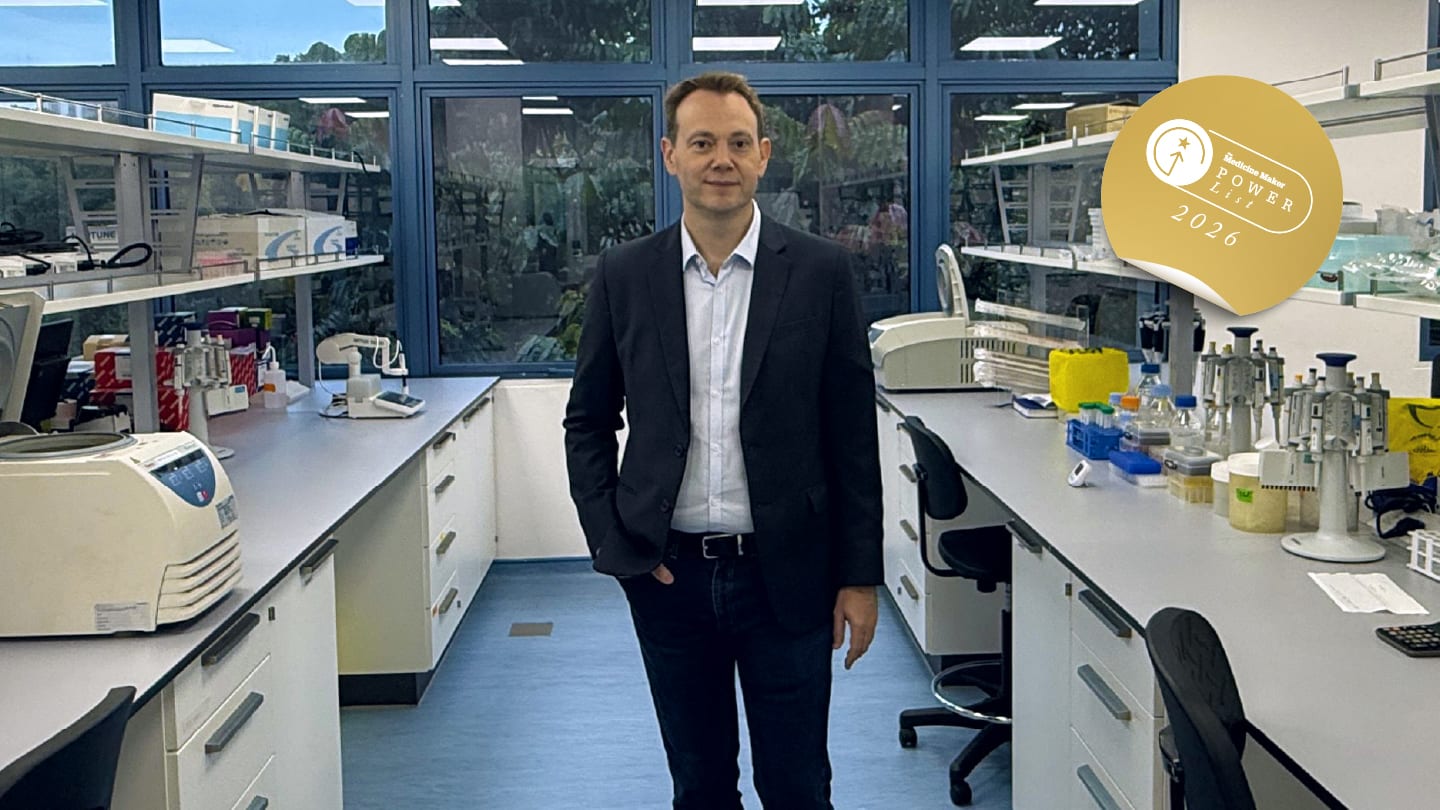
Miguel Forte, President, ISCT, board member of ARM and CEO of Kiji Therapeutics
In the current risk-averse environment, traditional investment is becoming more challenging. It is important to strengthen the message and the value proposition, and often clinical data, derisking and validating the project is required. I am concerned that we may not be investing enough in the initial steps of the translational path, where there is high risk and little supporting evidence, and in doing so not feeding the portfolio of companies. Some will disappear but we need a natural evolution and selection also in company creation and growth. At the same time, existing companies are pursuing alternative paths to investment mainly via business partnerships, licensing, and mergers and acquisitions as well as other financial approaches, to enable survival and progression towards further validation and de-risking of the value proposition.
John Maher, Chief Scientific Officer, Leucid Bio
The smartest approach is to be brutally clear about the translational path from the beginning. Strong science is essential, but it is not enough. Funders, partners, and commercial teams increasingly want to know not only whether a therapy can work, but whether it can be manufactured reliably, delivered efficiently, reimbursed sustainably, and clearly differentiated from existing or emerging alternatives.
That means building programs around compelling biology, a genuine unmet clinical need, scalable manufacturing, realistic cost of goods, and early engagement with regulators, payers, clinicians and patients. In the current environment, products and platforms that solve real-world implementation problems are likely to be more attractive than scientifically elegant concepts that are difficult to manufacture, deliver, or fund.
Simplicity should be a core strategic goal. Cell and gene therapies are inherently complex, so we should constantly challenge ourselves to simplify the design, manufacturing process, release testing, logistics, and clinical delivery wherever possible. The best programs will be those that combine biological innovation with practical deliverability – because in this field, a therapy only fulfills its promise if it can actually reach patients.
Daria Donati, Chief Scientific Officer of Genomic Medicine at Cytiva
The smartest strategy today is focus and credibility.
The era of broad, platform-agnostic narratives is over. Investors and partners are looking for:
Clear clinical differentiation
A credible path to manufacturing and cost control
Evidence of execution; not just vision
Companies also need to think beyond funding rounds and build ecosystem partnerships early with technology providers, CDMOs, clinical networks. No single organisation can solve this. We must work in collaboration to bring these life changing therapies to patients faster.
In a constrained environment, the winners will be those who combine scientific depth with operational realism.
Fabian Gerlinghaus, Cellares Co-founder and CEO
The practical answer, from our perspective, is to partner with Cellares because we can demonstrate scalable manufacturing economics, regulatory experience, and commercial capacity. That combination is rare, and the gap between developers who have it locked in and those who don’t is going to widen considerably over the rest of this decade as more programs approach commercial readiness at the same time.
Current market conditions have forced a useful discipline on the field. Capital is more selective than it was three or four years ago, which means programs and investors need a clearer line from science to patient to commercial reality. That pressure is uncomfortable for developers who grew accustomed to a different market, but it’s not a bad thing for the industry overall. Programs with genuine differentiation and credible paths to scale are still getting funded.
For cell and gene therapy developers specifically, the commercial calculation has become harder to ignore. Manufacturing costs are not a downstream problem, as they determine whether a therapy has a viable price point, whether payers will cover it, and whether patients can access it at volume. Companies that treat manufacturing as something to figure out later find that they are building on a shaky foundation. The smartest thing a developer can do is understand its manufacturing economics before they become a limiting factor.
Michael May, CEO, CCRM
Even though many emerging products have failed to meet commercial and adoption expectations, the key value inflection in the sector remains demonstrating clinical efficacy as quickly as possible, especially if the clinical indication/target market is chosen in the context of: “Is this an indication for which a cell and gene therapy approach is truly differentiated against standard of care and other modalities?”
Claudia Zylberberg, co-founder and board chair of ARScience Bio, founder and chair of Akron Bio, and co-founder and board chair of Kosten Digital
Stay very focused on real-world value creation.
Today, investors and healthcare systems want practical execution, measurable outcomes, and solutions that integrate into existing workflows. The days of building purely conceptual platforms are behind us.
The smartest strategy is to start with clear use cases, demonstrate impact quickly, and build credibility through execution. Partnerships with hospitals, healthcare systems, and industry stakeholders are becoming increasingly important because collaboration is essential in this field.
Be creative. Funding cycles come and go, but companies that understand where they create value and build strategic partnerships are best positioned to navigate changing markets.
Stuart Lowe, Head of Advanced Therapies, TTP
In a highly selective funding landscape, many companies have had to reassess and prioritize their core activities. Some therapy companies at an early clinical stage have chosen to defer manufacturing strategy and prioritize rapid data generation to accelerate investor discussions. However, this assumes that selective investors do not view manufacturing strategy and speed to commercialization as company differentiators. I would therefore suggest allocating resources to investigating and understanding process-scaling challenges ahead of investor discussions, so that sufficient capital can be secured and expectations around timelines aligned. Companies that do this can both stand out and safeguard their commercial position.
Jason Bock, CEO of CTMC
The smartest strategy is to be capital-efficient, clinically grounded, and brutally honest about what creates value.
The funding environment has forced the field to mature. That is painful, but it is not all bad. Investors are no longer rewarding cell therapy companies simply for having an exciting construct or a plausible platform. They want to see a credible path to clinical proof of concept, manufacturability, regulatory execution, and commercial differentiation.
For emerging companies, that means they should not try to recreate every capability internally. They should preserve capital for the experiments that create value: demonstrating that the therapy can help patients, identifying the right dose and product attributes, and building the evidence package needed for the next stage of development.
That is one reason CTMC was created. Our role is to help partners de-risk development by giving them access to integrated CMC, manufacturing, analytics, quality, regulatory, and clinical translation capabilities without forcing them to build a full infrastructure prematurely.
In today’s environment, the winners will be the companies that can generate high-quality clinical and CMC evidence quickly, make disciplined decisions, and avoid spending years and enormous amounts of capital on infrastructure before they know whether the product works.
Newsletters
Receive the latest pharmaceutical news, personalities, education, and career development – weekly to your inbox.