After years of exuberant funding, cell and gene therapy investors have become more selective, more cautious, and more focused on technologies that can overcome the practical limitations of earlier platforms. For Nordic biotech Circio, that meant abandoning its clinical cancer vaccine programs, relying on unconventional financing, and rebuilding investor confidence around a preclinical circular RNA platform.
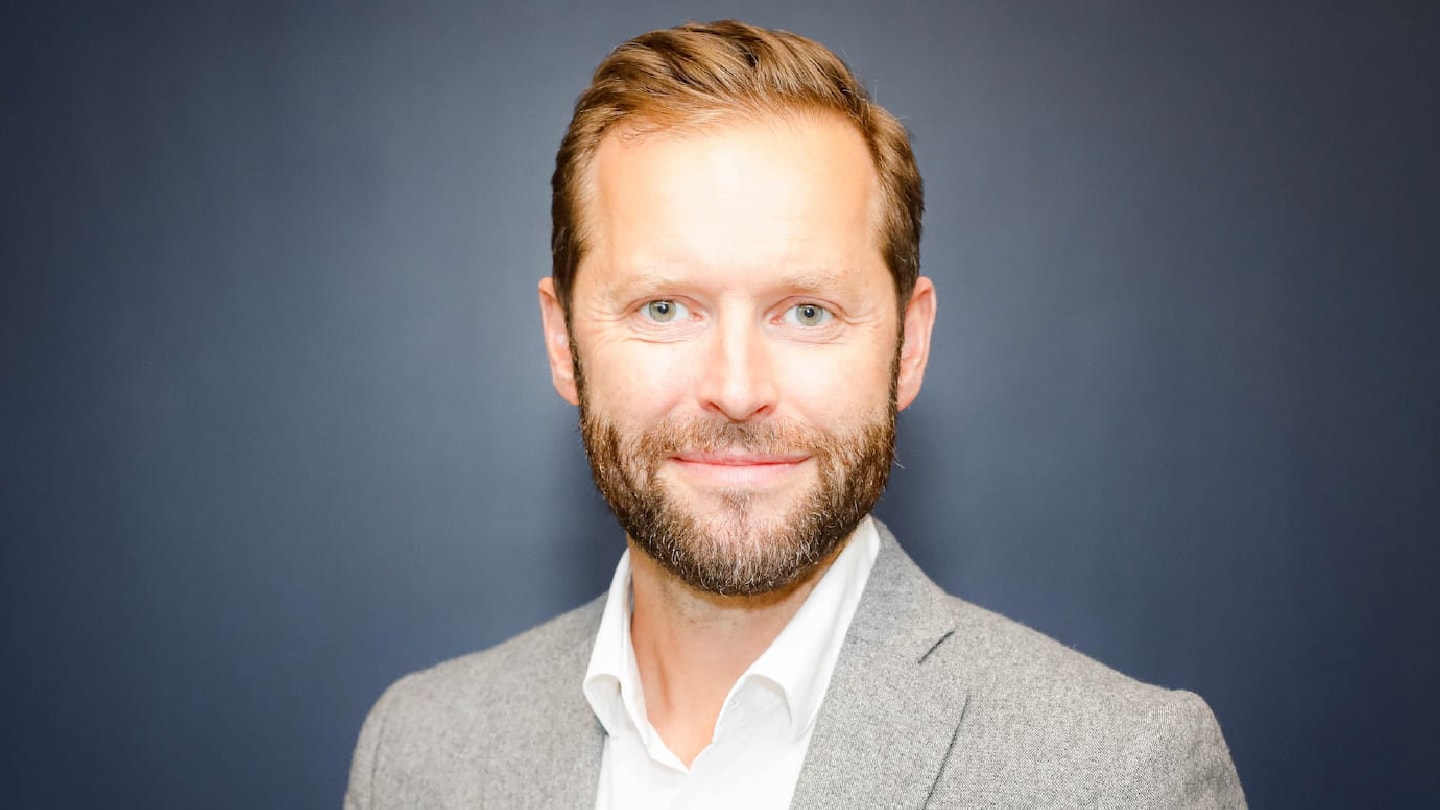
In this first article in a new series on the investment environment in cell and gene therapy, Circio CEO Erik Wiklund discusses how the company survived the downturn, why some modalities have fallen out of favor, and where he believes capital may flow next.
Read More: Inside the Rise of circRNA
In a companion article, Erik Wiklund looks beyond the funding story to explain his own role in the discovery of human circular RNA – and how circRNA has evolved from a curious biological phenomenon into a fast-moving therapeutic modality. Read more
Can you explain where Circio company is now, and perhaps talk about your experience raising funding in the current environment?
Before 2021, at Circio we had been concentrating on developing cancer vaccines, which were going a bit out of fashion. We had relatively encouraging data, but the trials were small and the datasets were not definitive enough. People were becoming less interested in those modalities. We had this angle into circular RNA because we had that background (myself and Circio’s Chief Technology Officer, Thomas Birkballe Hansen, are co-discoverers of circRNAs), and funding was piling into circular RNA, and so we made the strategic decision to park those old clinical cancer programs and reinvent the company as a circular RNA player.
That was late 2021. The capital markets were drying up. We had just terminated our main programs, and the company had already been publicly listed for a long time. You can imagine the situation: everyone was already nervous about biotech, and then here was a company shutting down its lead programs and announcing that it was going to focus on this circular RNA thing.
The share price tanked, some of the major shareholders sold out, and we had to become very creative about how we kept the lights on. We operated with a very low cost base and used some fairly "creative" financing forms, but it was enough to keep going and establish the platform.
How did the circular RNA platform help rebuild investor confidence?
To give an example of what the technology can do, we engineered AAV gene therapies that express their payload using circular RNA.
AAVs carry a gene into a patient with a genetic disease. The problem is that they often struggle to express enough protein. They are relatively weak, so you need to administer very high doses. And when you give those kinds of doses, it can become toxic to the patient.
We engineer AAVs that express the gene they carry using the circular RNA route instead of linear mRNA. The circular RNA has a half-life that is 70 to 80 times longer than mRNA. That allows the RNA to accumulate to much higher levels inside the cell, which in turn leads to much higher protein expression.
Last year, we showed that, in the heart using an AAV carrying a cardiomyocyte-specific promoter, we could increase protein expression by 40-fold. In theory, one could administer up to a 40-fold lower viral dose and still achieve the same therapeutic effect. And if you can lower the dose by that amount, you potentially eliminate a lot of the toxicity issues while also bringing costs down significantly.
That data was enough for us to secure a deal with one of the world’s top five pharma companies. They are funding part of our research to continue developing this AAV circular RNA strategy, specifically for CNS diseases.
Once we announced that deal, it generated a lot of attention locally in the market. We started to see positive momentum in the share price again, and eventually that allowed us to complete a proper financing round. In February, we raised around $7 million through an offering structured as units, each comprising one share and one warrant exercisable in late May or early June 2026. Since then, things have accelerated further. We recently completed an oversubscribed NOK 250 million (over USD 26 million) financing round, with support from both Scandinavian and international investors. That gives us a long and secure cash runway to broaden and accelerate the circVec platform, including into applications beyond gene therapy, such as cell therapy.
Are you finding that investors are looking for different things at the moment compared with a few years ago?
Absolutely. If we start with VCs, investors are now much more cautious about the runway of the companies they back. From around 2015 through to the COVID peak, companies could raise money for maybe one or two years of runway, and everyone assumed that, as valuations increased, you would simply raise again later.
A lot of investors got burned when that second fundraising never materialized. Now, many financing rounds are designed with a five-year horizon in mind, taking a company all the way through to a meaningful clinical readout. That kind of long-term thinking was very unusual just a few years ago.
The consequence is that there are fewer VC rounds overall, but the rounds tend to be much larger. Because those rounds are larger, VCs also want bigger ownership stakes. The trend now is that they often get involved almost at the academic stage. Rather than investing in companies that are already operating, they identify a technology first, build a company around it themselves, and then use the initial seed financing to prepare for a very large Series A that can carry the company all the way to clinical validation.
A lot of these companies also operate in stealth during the early phase. The VC takes a major stake, then brings in its network. Many of these firms almost operate like clubs – they repeatedly invest in each other’s deals and syndicate the larger rounds together.
If you are trying to raise smaller rounds, or if you did not bring a VC on board at that very early stage, it has become excruciatingly difficult to fundraise. You have to become very creative. We were in a particularly unusual position because we already had a publicly listed company while trying to build a completely new, very early-stage pipeline. That structure made it almost impossible to bring in traditional VC investors.
What are some of the creative solutions in that situation?
We focused heavily on relationships. I spent a lot of time convincing the investors who stayed with us through that difficult period that we genuinely had a new technological platform that could become something significant if they were willing to stay with us for a couple of years.
We ended up with very strong relationships with four or five core investors. They believed in the technology as well as the management, but understandably it was difficult for them to finance the company all the way through on their own. That meant we also had to layer in additional financing mechanisms, including what is often called a “death spiral” loan or convertible bond structure.
If you are a listed company, certain investors will give you a loan, but instead of repaying the loan in cash, you can repay it in shares. The investor then sells those shares into the market to recover their money, and in some cases they continue financing the company by recycling the same capital back in again.
We had a setup where an investor was funding us at around $400,000 per month. They would convert the bonds into shares, sell those shares, and then continue topping up the financing. The downside is that it creates constant selling pressure in the market. There are always new shares entering circulation, which both dilutes existing shareholders and increases supply in the market, putting downward pressure on the share price.
The key thing for us was making sure our existing shareholders understood and supported the strategy. They stayed aligned with us throughout the process and continued supporting the company in parallel.
Together with that convertible bond facility, we were able to generate the data package needed to secure the pharma partnership. Once that deal was in place, we were then able to attract new Scandinavian and local family offices, and effectively rebuild the cap table from there.
At this point, we have completely exited the convertible bond arrangement. In the end, everybody came out happy.
How has investor sentiment shifted across cell and gene therapy – and where do you see capital flowing next?
Certain areas have gone completely out of fashion over the past few years.
For example, I think it is probably extremely difficult right now to raise money for a traditional mRNA company because investors are now looking at newer formats like self-amplifying RNA and circular RNA. The same thing has happened in gene therapy and cell therapy. Autologous cell therapy, for example, has seen capital almost completely dry up.
But I don’t think these modalities are actually dead. What really happened is that they experienced huge momentum and people started believing they would solve everything. Checkpoint inhibitors went through exactly the same cycle when Keytruda and nivolumab emerged between 2010 and 2015. You get this enormous spike of excitement, then the market crashes because people realize the next wave is not arriving as quickly as expected.
There hasn’t really been a major mRNA approval since the COVID vaccines, for example. What actually happens is that the industry starts identifying the limitations and caveats of the technology. People realize it is not going to be as easy as everyone initially thought. Then a second layer of innovation emerges, focused on fixing those weaknesses. That is where you start seeing the next generation of therapeutics appear.
In cell therapy, that now means things like in vivo CAR-T. In AAV gene therapy, traditional AAV approaches have gone cold, but now investors are getting interested in second-generation technologies – targeted capsids and optimization technologies like ours.
RNA is probably going through the same process now. Outside the US especially, interest is starting to come back through circular RNA and self-amplifying RNA as potential next-generation formats.
How is the emergence of in vivo CAR-T changing the way investors think about autologous and allogeneic cell therapy?
I think 2026 is probably the year when we start getting real answers. Right now, if you are working in autologous cell therapy, you are basically stuck. Nobody wants to fund it or partner with it unless you are extremely advanced – like Arcellx, which is already very close to approval. At that late stage there is still a market opportunity before in vivo CAR-T technologies potentially arrive.
But for earlier-stage autologous cell therapy companies, I think it is almost impossible at the moment. To some extent, the same applies to allogeneic approaches because you still have to manufacture cells.
Then along comes in vivo CAR-T, which – if it works – could completely revolutionize cell therapy. The early preclinical data look very strong, especially in primates, and the first clinical trials are now ongoing. Everyone is waiting for that first wave of clinical data.
Until those results arrive, I think investors are reluctant to put money into the older approaches because there is a real possibility that this new technology works and suddenly becomes the future of the field. It is potentially much cheaper and much simpler.
Of course, it may also turn out not to work. Or, more realistically, it will probably work to some degree but prove more complicated than people initially hoped. In that scenario, there may still be room for both technologies. But until we get more definitive answers on how in vivo CAR-T translates clinically, I think it is going to remain very difficult for companies in the autologous space.
During 2026 we should finally start getting some real signals from the field. I'm excited to see what happens.
Newsletters
Receive the latest pharmaceutical news, personalities, education, and career development – weekly to your inbox.