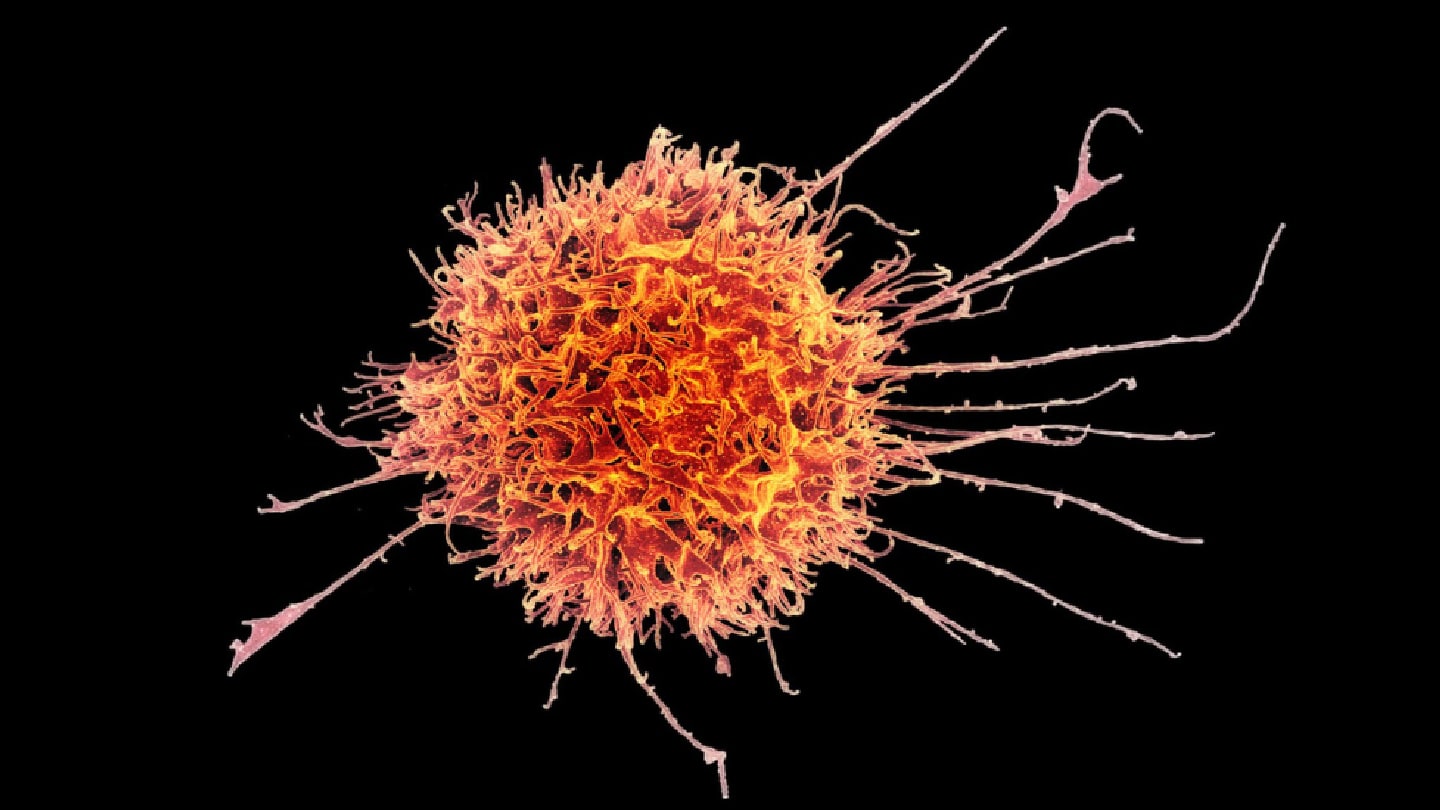
Tissue-resident natural killer cells generated from donor blood slowed the growth of solid tumors in mice and could form the basis of an off-the-shelf cell therapy, according to a preclinical Stanford Medicine study.
The researchers differentiated human natural killer cells ex vivo into a CD39+CD49a+CD103+ tissue-resident phenotype, which they describe as cytotoxic tissue-resident NK cells, or ctrNK cells.
“We show that these tissue-resident natural killer cells infiltrate into the solid tumors much better than conventional natural killer cells. It was very reproducible, very striking and very clear,” said John Sunwoo, senior author of the study and the Edward C. and Amy H. Sewall Professor in the Stanford School of Medicine, in the press release.
Using peripheral NK cells from human blood donors, the team tested different culture conditions to understand why tissue-resident NK cells can sometimes appear immunosuppressive and, in other contexts, strongly cytotoxic. They found that sustained exposure to soluble TGF-beta produced tissue-resident-like NK cells with weaker activity, whereas short-lived contact with epithelial tumor cells in the presence of IL-15 generated cytotoxic cells expressing CD39, CD49a, and CD103.
In mouse models, adoptive transfer of the cells reduced tumor burden in several solid tumor settings, including head and neck squamous cell carcinoma and melanoma models.
The researchers also tested the cells with cetuximab, an EGFR-targeting monoclonal antibody approved for metastatic colorectal cancer and advanced head and neck squamous cell carcinoma. The combination suppressed tumor growth in mice more effectively than either treatment alone.
From a manufacturing perspective, the approach could be relevant because NK cells may be used allogeneically, raising the possibility of a non-personalized cell therapy product. “It would be almost an off-the-shelf drug,” Sunwoo said. “It could make cell therapy much more accessible to a wider variety of patients.”
According to the press release, Sunwoo and colleagues are planning a Phase I clinical trial of the combination therapy in patients with advanced squamous cell carcinoma, pending FDA approval. The team has also developed and applied to patent a method for transforming and expanding the cells at scale, with NK cells from one donor potentially generating around 20 doses in about two weeks.
“They’ll be cryopreserved, so we can make a bunch of doses and give it to different patients,” Sunwoo said. “There would be no delay.”
Newsletters
Receive the latest pharmaceutical news, personalities, education, and career development – weekly to your inbox.