What was your biggest professional highlight of the past 12 months?
Over the past year, the most meaningful highlight for me has been advancing our late-stage clinical program in bradykinin-mediated angioedema across our Phase 3 programs, and reaching a key milestone with the readout of topline data from our RAPIDe-3 study of investigational deucrictibant for the on-demand treatment of hereditary angioedema (HAE) attacks.
The goal of any clinical development program is to evaluate whether an investigational therapy can safely address an unmet medical need. The RAPIDe-3 data suggest that deucrictibant may offer a clinically differentiated profile for the on-demand treatment of bradykinin-mediated angioedema and represent an important step in our development program.
Equally important has been preparing the organization for the next stage of our journey in bringing treatments to those living with bradykinin-mediated angioedema, where unmet needs remain. Our team has been laser-focused on the submission of our first New Drug Application of investigational deucrictibant for the on-demand treatment of HAE attacks.
Progress in rare diseases is never the result of a singular milestone alone, but rather a series of disciplined steps, and it is rewarding to see those efforts come together.
Have small molecules been overshadowed by newer modalities – and where do they still hold a clear advantage?
There has certainly been significant excitement around newer modalities, and rightly so – they are expanding what is scientifically possible. However, I would not say small molecules have been overshadowed. Rather, we are seeing a more balanced recognition of where each modality can deliver the greatest value.
The oral bioavailability of small molecules continues to offer clear advantages as a route of administration: oral therapies decrease the burden of treatment by potentially allowing for more convenient, discreet, and faster administration. They also benefit from relatively straightforward and scalable manufacturing processes, broad tissue penetration, and a lower risk of immunogenicity compared with more complex modalities.
Importantly, advances in medicinal chemistry and structure-based drug design have also significantly improved our ability to create highly potent small molecules, reducing off-target effects and narrowing the perceived gap between small molecules and more complex modalities.
For me, it is less about competition between modalities, and more about selecting the right tool for the biological and patient needs.
What’s one area of drug development or manufacturing that is advancing faster than most people realise?
One area that is evolving rapidly – perhaps more than is broadly recognised – is the integration of translational science across the drug development continuum, increasingly enabled by advances in data science and artificial intelligence (AI). We are increasingly able to connect insights from preclinical work, biomarkers, and early clinical data in a way that more directly informs decision-making as programmes advance.
This is important not only for improving development efficiency, but also for how we design studies and select endpoints that are meaningful for patients. AI is beginning to play a meaningful role here – helping to identify patterns in complex datasets, refine patient selection, support more informed trial design, and potentially accelerate R&D timelines. What is particularly notable is how these considerations are being integrated earlier in development, rather than addressed later as a separate step.
This more integrated approach – linking translational science with development strategy – can help reduce uncertainty earlier and support a more efficient path toward delivering new options to those that need them.
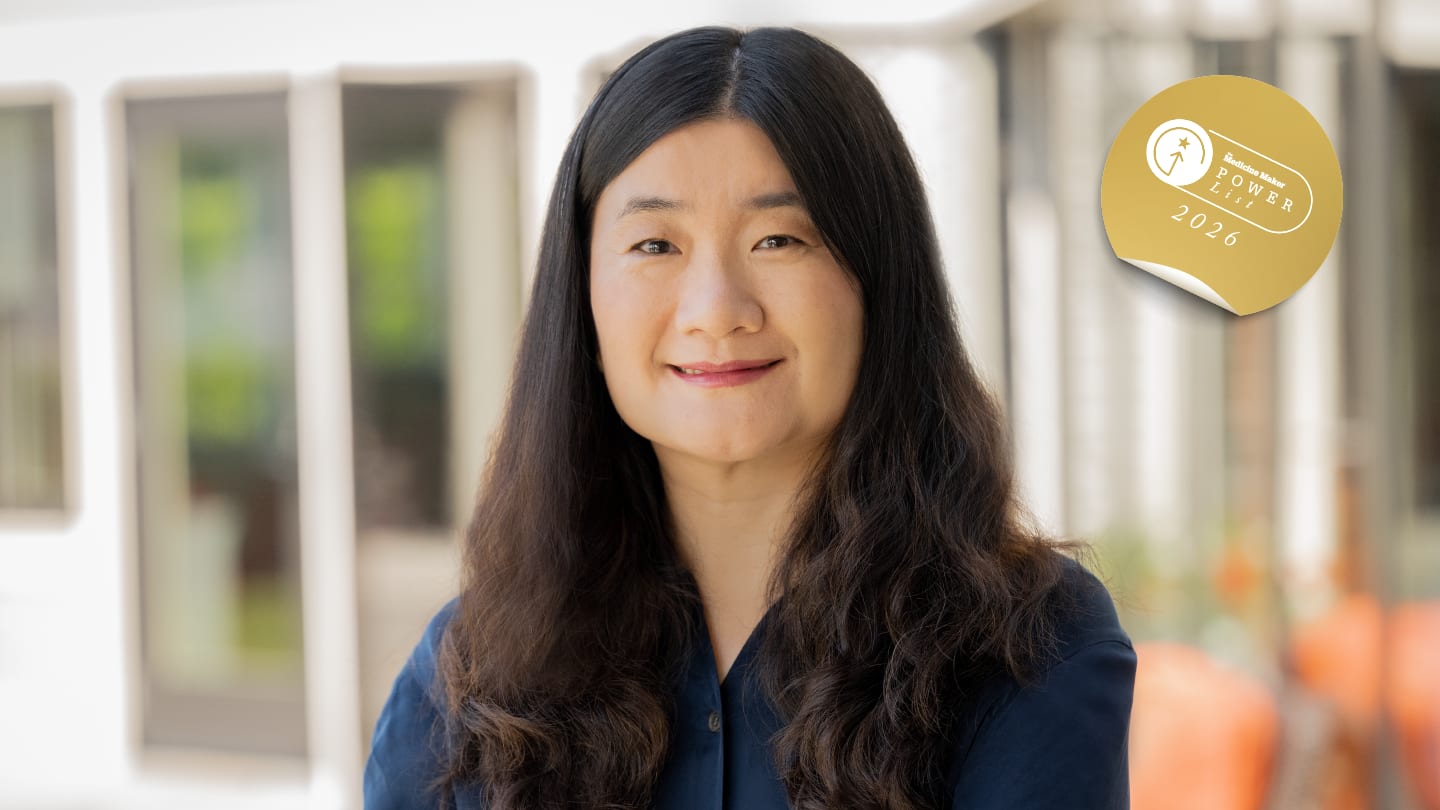
Peng Lu is Chief Medical Officer at Pharvaris
Newsletters
Receive the latest pharmaceutical news, personalities, education, and career development – weekly to your inbox.